


A Light in a Treacherous Strait
The Brothers Islands form a small, rugged archipelago off the eastern coast of Arapaoa Island in Cook Strait, famous for fierce winds and tempestuous seas.1, 2 To improve navigation through the narrowest part of the strait, Colonial Marine Engineer John Blackett designed a lighthouse station for North Brother Island, a steep rock rising 79 metres above sea level.2, 5 Works overseer W. C. Mirfin directed day-labour construction teams under extreme conditions, where landing supplies required navigating hazardous swells onto slippery concrete platforms.2
The 12-metre tower was constructed using a heavy ironbark timber frame clad in totara planking, backed by a stout wooden dwelling for the keepership.2, 5 The island's anemometer once registered wind speeds of 2,000 miles over a 24-hour period, reflecting the gale conditions of Cook Strait.2 In June 1877, local press playfully reassured Wellington property owners that constructing a lighthouse on the isolated rock was purely for maritime safety rather than an attempt to relocate the colonial capital.3
First lit on 24 September 1877, the station featured a lantern manufactured in Edinburgh and a second-order dioptric apparatus built in Paris by Barbier et Fenestre.1, 2 The main light flashed white every 10 seconds with a 22-nautical-mile range.2 An auxiliary annular lens projected a fixed red beam over a 5-degree arc to warn mariners of the dangerous Cook's Rock.2
A Life of Isolation
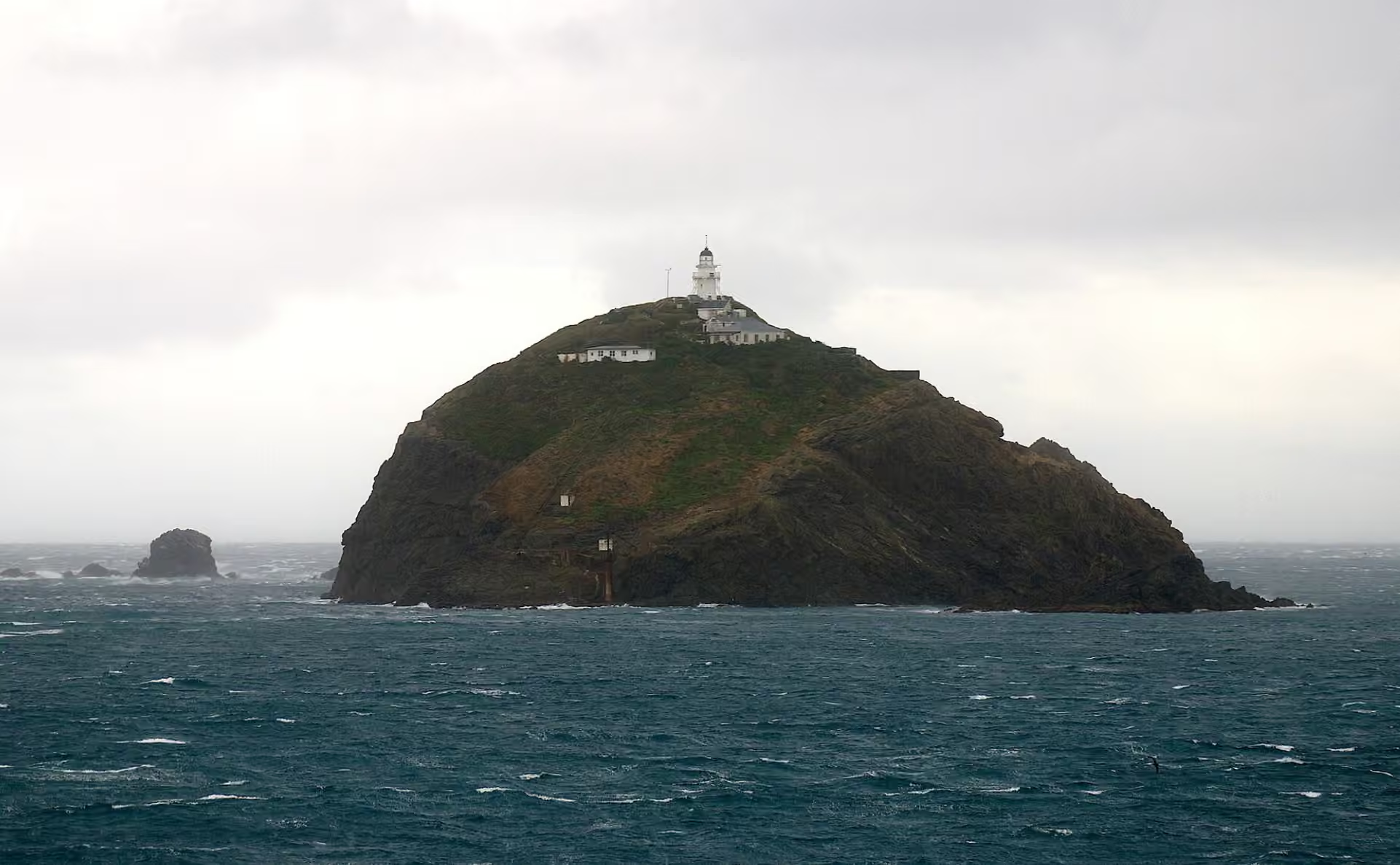
As New Zealand's only rock station, the post offered a unique and demanding environment for its keepers.2, 4 With negligible soil and sparse vegetation, early workers captured rare indigenous lizards on the rock and sent them to the Colonial Museum in Wellington.2 The hazardous landing conditions - requiring a crane and a "billy-pugh" swinging basket - and confined quarters meant the station was deemed unsuitable for families, remaining a bachelor post throughout its manned operation.4, 5
The station was staffed by four keepers operating on a roster of three months on the island followed by one month of leave, where keepers served as a training school for new recruits.2 Shifts were coordinated using a whistle-tube signalling system connecting the lighthouse tower to the residential quarters.2 A steep tramway and winch system transported landed cargo from the shore platform up to the buildings.2 Fortnightly supply runs aboard vessels such as the launch Enterprise delivered essential provisions, supplemented by emergency reserves of salt meat and biscuits.5, 2
Automation and Heritage
As Maritime Safety Authority demanning programmes progressed across the country, the Brothers Island Lighthouse was selected as the final manned station in New Zealand to undergo full automation.1, 4 In 1990, resident keepers were permanently withdrawn after 113 years of continuous human operation, and the beacon was converted to a modern rotating light powered by solar-charged batteries.5, 5
Administered as a nature reserve by the Department of Conservation, North Brother Island serves as an exclusive, predator-free sanctuary for the rare Brothers Island tuatara.4, 5 Strict landing restrictions preserve both the historic wooden light station and the delicate sanctuary environment.5