


The Founding of a Town Centre
The origins of Seymour Square date back to 1857, when an area of approximately one hectare was set aside as a public reserve in the developing settlement of Blenheim, then commonly known as 'The Beaver'. The square was named after Henry Seymour, an early European landowner who, together with his son-in-law A. G. Fell, drew land sections in the Wairau in 1848, in the area where Blenheim now stands.1,2 In its early years, the reserve was used for recreational activities, including cricket and rugby, before more formal landscaping began in the early twentieth century.1
A Place of Remembrance: The War Memorial
Following the First World War, Marlborough residents debated how and where to commemorate those from the province who had died in the conflict. After several years of disagreement, Seymour Square was selected as the site for the provincial memorial in the 1920s. The project was funded through public subscriptions, with stone collected from different parts of Marlborough to represent the wider province.3 The War Memorial Clock Tower was designed by architect Roger Bacon and officially unveiled on 4 February 1928. Rising approximately 16 metres above the square, it commemorates the Marlborough residents who lost their lives in the First World War.3,4,5 The tower remains Marlborough's principal First World War memorial and an important focus for civic remembrance and Anzac Day commemorations.3,6
Landscaping a Civic Space
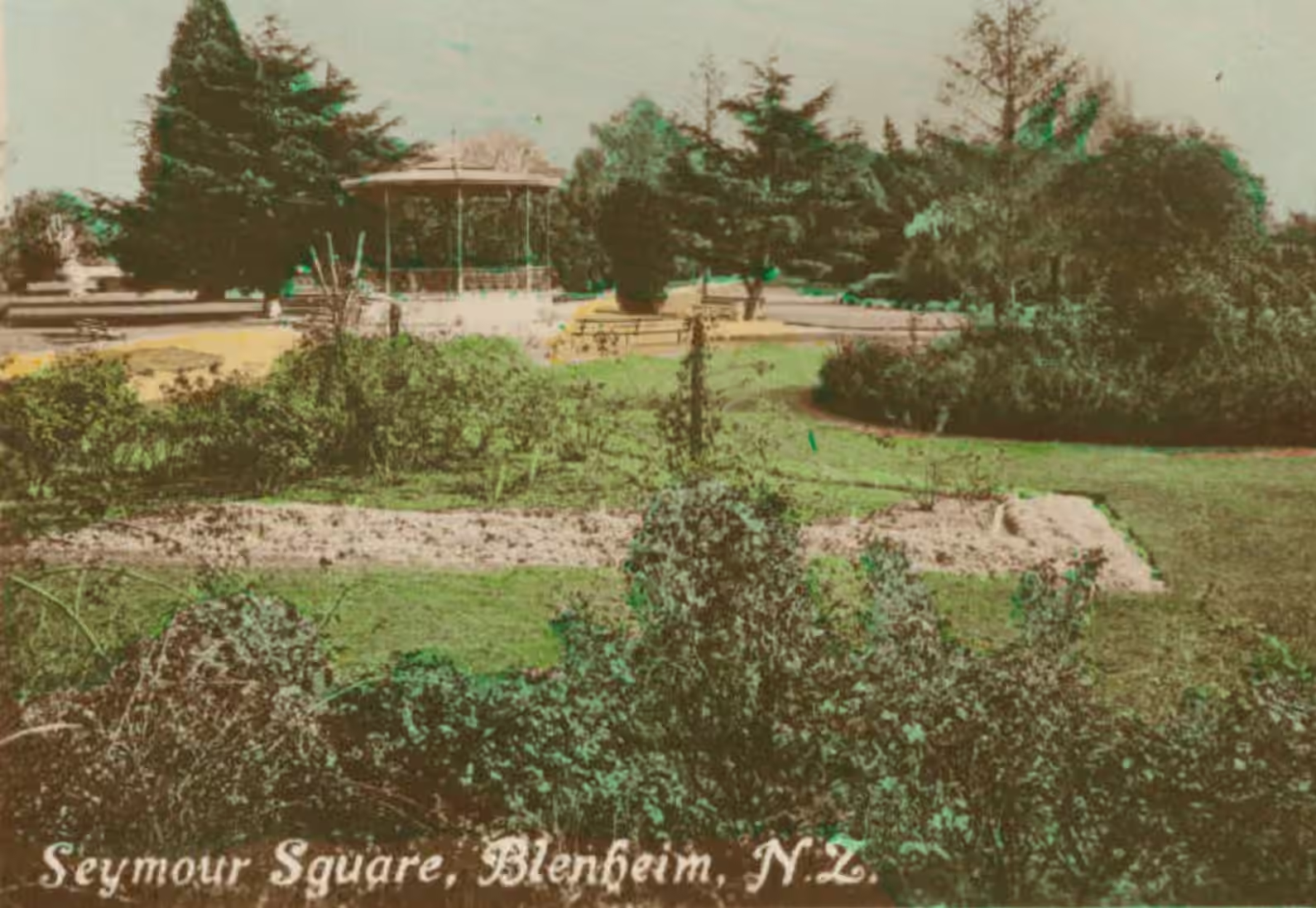
Over the decades, Seymour Square developed from an open recreational reserve into a formal civic garden. Today, its lawns, pathways, flowerbeds and seasonal planting displays make it one of Blenheim's prominent public gardens.1 Another important feature is the Second World War memorial fountain, which replaced an earlier band rotunda and was unveiled in 1953. The fountain commemorates those who served during the Second World War, complementing the First World War memorial clock tower nearby.1,6 Together, the gardens and memorials give Seymour Square its distinctive character as a place of recreation, remembrance and civic pride.
The Community's Gathering Place
While it is a place of history and remembrance, Seymour Square remains an active part of the Blenheim community. Its formal gardens provide a setting for everyday recreation, while the memorials continue to serve as focal points for commemorative services and civic gatherings. The square also hosts community garden events and remains a prominent feature of central Blenheim.1,6 Its continuing use reflects the enduring importance of this public space to Marlborough's civic life.